








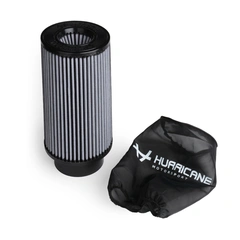


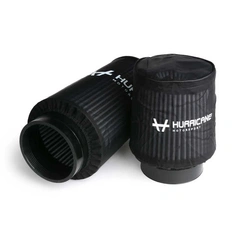


















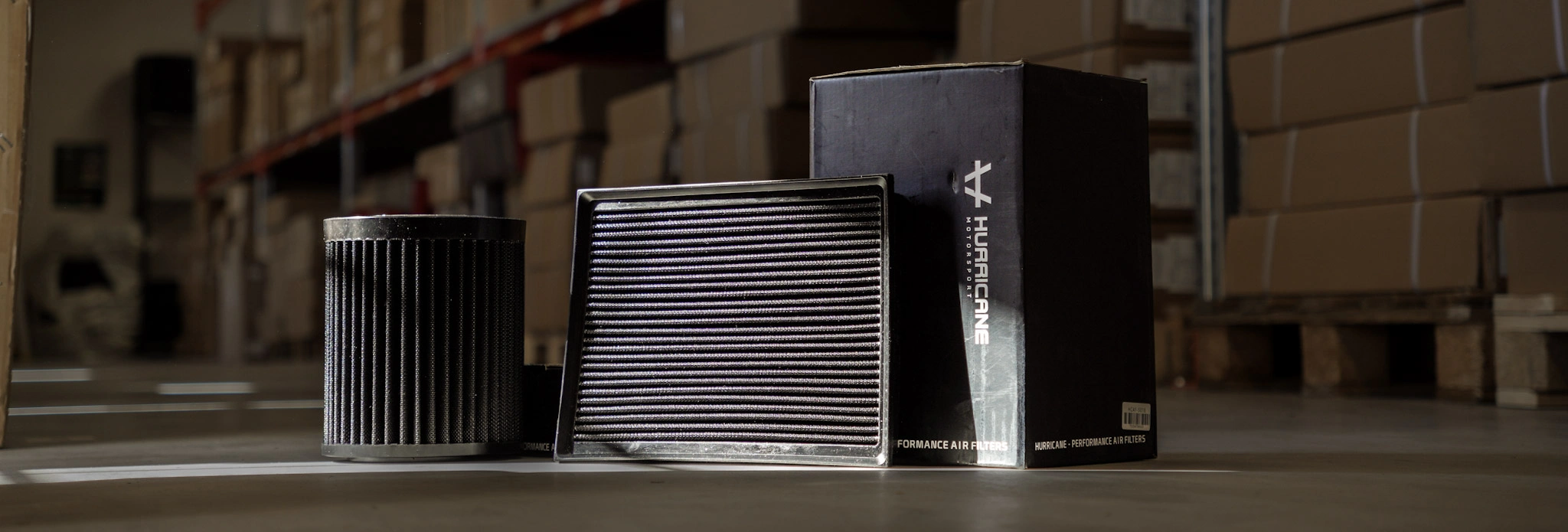
When tuning an engine or driving hard on the track, OEM parts rarely make the cut. A standard paper filter is designed for a regular commuter car, not for a machine that demands maximum oxygen intake. Hurricane filters are engineered to meet the requirements and technical specifications that high-performance engines crave. Hurricane filters come in a discrete black finish with the best pricing on the market. Look no further, Hurricane model-specific filters are here.
Hurricane vs. market-leading performance filters
We take pride in the fact that our filters utilize proven technology that outperforms the competition. Hurricane air filters are based on multi-layered, oil-impregnated cotton gauze derived from the Hurricane motorsport series. This means you get air flow (CFM) and filtration levels matching the industry leaders, but with the added benefit of motorsport-grade technology. Hurricane air filters use the same high-quality precision rubber for the frames and the same surgical-grade cotton in the filter media. The only difference is the design, a clean black look that fits perfectly in your factory airbox.
Why does a tuned car need a performance air filter?
When you perform a software calibration (chip tuning) or upgrade engine components, the demand for airflow increases. This is where the original filter quickly becomes a bottleneck. By improving airflow, the engine can breathe freely and take in the extra oxygen required to deliver increased performance. A traditional paper filter creates resistance, forcing the engine to work harder to pull in air, much like trying to breathe through a straw while running. A Hurricane filter minimizes this resistance and provides free-flowing air. The result is an engine that can fully utilize the power you built it for, especially when combined with other performance upgrades.
In a tuned turbocharged car, air is sucked in with immense force. In the worst-case scenario, a standard paper filter can actually collapse or restrict the flow so much that the engine is forced to operate outside its efficiency window, creating unnecessary heat and power loss. The cotton gauze in Hurricane filters is reinforced with a fine-mesh metal screen to ensure the filter maintains its shape. By using a model-specific drop-in filter, you retain the car's original airbox, which is usually optimized to draw in cold air from outside the warm engine bay. Many make the mistake of installing an open filter that sucks in hot air from the engine compartment, but with a Hurricane drop-in filter, you get the high flow of a performance filter combined with the cold air intake of the factory system. This is the ultimate setup for consistent power over time.
Find the right filter for your car
Our range covers most cars on the market. Whether you drive a stock vehicle, an optimized BMW M-car, a Stage 1 tuned Volvo, or a high-revving Audi RS, we have the filter that matches your factory airbox perfectly. We carry the correct filters for over 6,000 car models!
The easiest way to navigate the thousands of combinations we support is to enter the category below and use the vehicle filter to find the exact match for your car.
Instructional video
We have, of course, created a video explaining how to install our filters in practice.
- Carefully unscrew the airbox and remove your old filter.
- Verify the filter to ensure the new one is the exact same size.
- Clean the airbox housing.
- Install the new filter.
- Reassemble the airbox in reverse order.
- Enjoy your improved performance!
Filter cleaning
Driving with a dirty filter is like trying to vacuum with a full bag. It's sluggish, the engine has to struggle, and the results are poor. Since the Hurricane filter is a lifetime filter, it needs a thorough cleaning at regular intervals to maintain its maximum airflow.
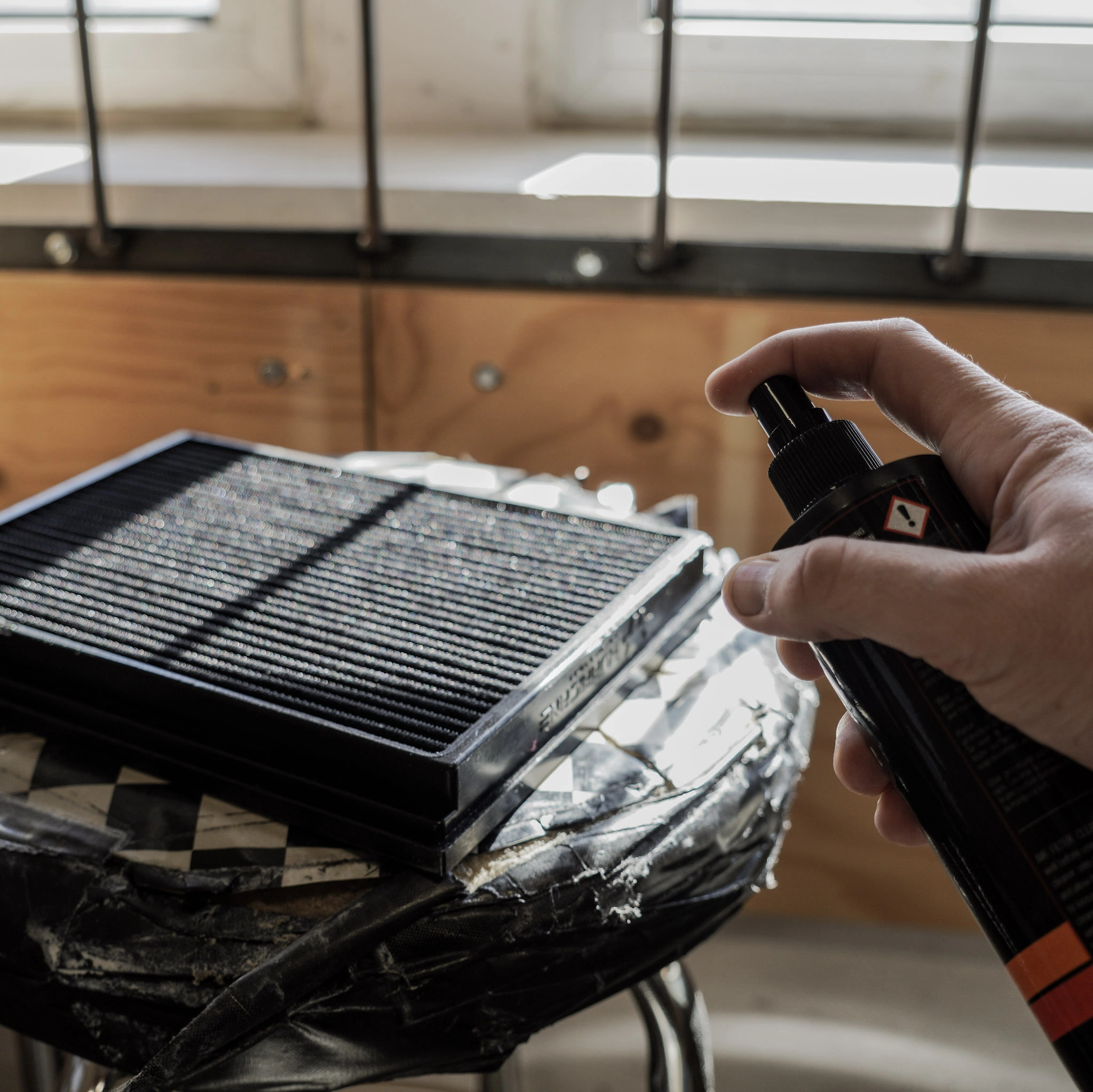
With acleaning kit, you restore the filter to like-new condition: the cleaning solution dissolves the old, saturated oil and lifts the dirt out of the cotton gauze so it can be rinsed away with ordinary water. Remember to never use compressed air, as it can damage the fine fibers – instead, let it air dry completely before spraying on a new, thin layer of filter oil. Once the oil has settled, the filter is like new again; ready to act as a magnet for harmful particles while allowing the engine to take deep, unrestricted breaths.
FAQ - Frequently asked questions about air filters for cars and motorsport
How much power does a performance air filter or drop-in filter provide?
A performance air filter doesn't create power on its own, but it reduces restrictions in the intake system. By lowering the pressure drop, the engine can draw in air more efficiently, often resulting in a noticeable power increase of 2–5% depending on other vehicle modifications. For a turbocharged engine, a high-flow filter means the turbo doesn't have to work as hard to reach the target boost pressure.
Is a drop-in filter better than an open air filter?
It depends on the application. A Hurricane drop-in filter is installed in the factory airbox and is often the best choice for street cars as it protects against hot engine bay air. An open air filter is primarily used when the airbox becomes a bottleneck at higher power levels or when space requires a custom solution, but it often requires a heat shield to avoid drawing in hot air (heat soak).
Can oiled air filters damage the car's Mass Air Flow (MAF) sensor?
This is a common myth usually rooted in incorrect maintenance. If a filter is drenched in oil, the excess can end up on the MAF sensor. Hurricane performance filters are designed with the exact right amount of oil from the factory to maximize filtration without risking the sensor. When cleaning, it is important to follow the instructions and not over-apply the filter oil.
What size air filter do I need for my power level?
On a turbo setup, you should use a dimension that is equal to or larger than the turbo's inlet.
How often should you clean or replace a performance air filter?
In motorsport, the filter is exposed to much more dirt, tire smoke, and debris than during regular driving. We recommend inspecting the filter after every race weekend. For a street car, cleaning every 10,000–15,000 km is usually sufficient, but if you're drifting, you should clean the filter significantly more often to maintain maximum flow and response.
Does a performance air filter provide better sound and throttle response?
Yes, absolutely. By removing restrictive silencer boxes and paper filters, you get a more pronounced intake sound, especially on turbocharged cars where you can hear the turbo spool up more clearly. Throttle response improves because the engine can more quickly equalize pressure differences in the intake when the throttle body opens.
What is the difference between cotton, foam, and synthetic filters?
Cotton filters (like our Hurricane products) provide the best balance between high flow and extremely good filtration. Foam filters often flow well but can degrade over time due to oil mist and heat. Synthetic filters are often maintenance-free but rarely reach the same flow capacity per square centimeter as a high-quality, low-resistance cotton filter.
Do I need to remap the car after changing the air filter?
When switching to a model-specific drop-in filter, a remap is normally not required as the factory ECU can compensate for the improved flow. However, if you rebuild the entire intake system with an open filter and larger pipe diameter, you should check the air/fuel ratio (AFR), especially if you're running an aftermarket management system like MaxxECU, to ensure reliability.
How do I prevent the air filter from sucking in hot air (heat soak)?
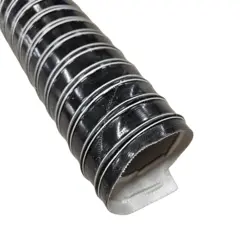
Hot air is less dense and contains less oxygen, which reduces power. In drifting, this is a major issue. We recommend building a heat shield in aluminum or composite and ducting in fresh air from the outside via a hose or an intake in the hood or front bumper to keep the intake air temperature (IAT) as low as possible.
Can an air filter collapse at high boost levels?
Yes, cheap filters without an internal structure can collapse under the intense vacuum that occurs in front of a large turbo at high boost. Hurricane filters are constructed with a heavy-duty mesh frame that withstands extreme loads without deforming, which is critical for avoiding engine failure on race cars.


